

For Ritu Sharma, who writes and styles as indian_saritorialist, the saree is not a once-in-a-while occasion garment. It is clothing meant to be lived in. Through her drapes, styling, and advocacy for handloom, she shows a new generation that six yards can be as practical as they are beautiful.
In her interview with Women Fitness, Ritu Sharma shares her earliest memories of the saree, the drapes that keep your hands free, her favourite handloom weaves, and advice for Gen Z and first-time wearers.

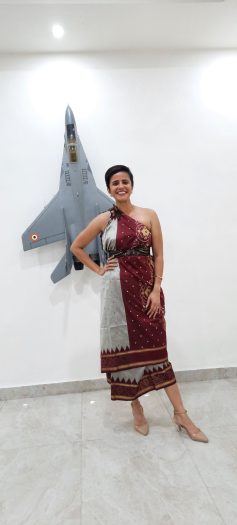
Ritu Sharma on her Memory of Six Yards
Ritu’s earliest memory of the saree is of her mother. She comes from Haryana, where women favour suits for everyday wear and keep sarees for big occasions. Her mother wore hers to formal events in the defence fraternity, and the garment made her shine even more.
Ritu later became a journalist and made the saree her workwear. After her children were born, she gave it up for two years because it felt inconvenient. Then she realised that the saree is not occasion wear but a functional garment. Millions of women across India wear it to the fields, ride cycles in it, and do every chore in it. That realisation sent her looking for drapes that were functional and kept her hands free.
She found that she did not need to reinvent anything. India already holds centuries of draping art beyond the popular Nivi drape. She began testing the regional drapes one at a time, auditing each for how well it worked for her.
The Sari Series and a Style of Her Own
One of the biggest influences on her journey has been The Sari Series, a digital anthology that documents India’s regional sari drapes through more than 80 short films. Ritu started by bookmarking drapes, practising them as shown, and then adapting them to her own style and comfort.

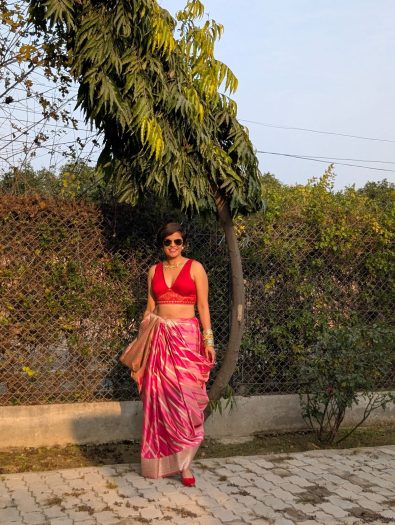
From Wearing to Styling
Ritu says wearing a saree for yourself is easier, because your style evolves with you over the years. Styling someone else is a different matter. She can assess body type and the fall of the fabric, but it is harder to gauge how far the wearer is ready to experiment. Many of the women she has draped are hesitant, especially about wearing a saree without a blouse and petticoat. So rather than jumping to drapes considered bold, she begins slowly and builds up.
Handloom Loves
Ritu is in awe of India’s weaving traditions and keeps a wish list of sarees she hopes to own one day.
- Silks: Kanjivaram, Pochampally Ikkat, Bandhani, Ajrakh and Muga
- Cottons: Patteda Anchu, Kalamkari, Ilkal, Ikkat and Moraing Phee
- Summer favourites: chiffons and linens, which she finds chic

What Gen Z Should Know
Ritu has a message for Gen Z. Fast fashion has its place, but wearing art, a one-of-a-kind piece, is true luxury. Every state has its own weaving tradition, so a saree wearer never runs out of things to explore. Cost need not be a barrier, since many weaves are affordable. Once you start investing in sarees, she says, they last for years and carry you through life’s milestones with elan.
She also points to the saree’s versatility. The same saree can go to a wedding, a work meeting, or a soiree with friends depending on the styling, something Western dresses cannot always do. It can even be draped by men as a dhoti. In her view, the saree is limited only by imagination.
It also forgives a body that changes. Weight fluctuates through the month, but a saree can be paired with a shirt, blazer or crop top, whatever works. Ritu has even draped her Kanjivarams as a dress.

Working with Weavers
Ritu tries to source sarees directly from weavers. As a fauji wife, she travelled across the country, and that gave her a deep appreciation for the work weavers put into exquisite pieces. She no longer calls a handloom saree expensive. She says it is simply not in her budget at present, so she saves and buys it later. She has moved from buying ten sarees to buying the one that truly moves the needle for her heart.
Styling by Mood
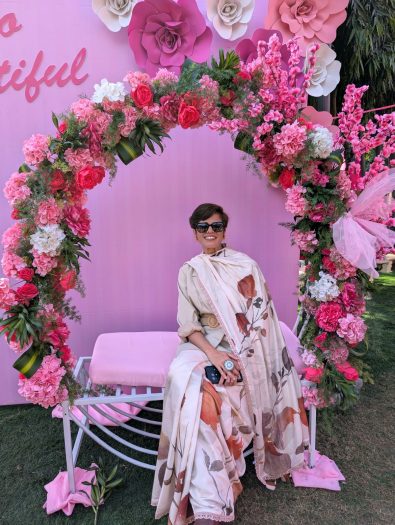
Ritu does not follow a formula when styling. Mood matters more than anything, and her draping is as fluid as the saree itself. She has to see the saree and feel it, then decides in that instant how to wear it. Sometimes she imagines in advance how a particular saree would look in a particular drape.
Tips for First-Time Wearers
Ritu’s advice for anyone who feels intimidated is to wear sarees often and keep experimenting until you find your comfort zone. She suggests starting with easy-to-manage fabrics. Her starter wardrobe has three pieces:
- A cotton saree such as Patteda Anchu or a South Indian cotton
- A linen saree
- A leheriya in chiffon or georgette
These are light to wear and light on the pocket. Once confidence builds, she says, it is time to move on to other weaves and materials.
For Ritu Sharma, the saree was never meant to wait for a special occasion. Her message to Gen Z is to wear it often, drape it their own way, and let six yards become part of everyday life.